
You do the same work. You spend the same amount of time. The same physical exhaustion, the same mental pressure. But if the money that lands in your account at the end of the month is in Won, your mind works the same way every time: calculations, saving, the question of whether it will be enough. The moment the money arrives, it's already divided up. Rent, food, transport, phone, taxes. Money that comes in Won doesn't give you a choice, it spins you inside the system. You don't control the money, the money controls you. That's why so many people work in Won and stay constantly busy, yet feel empty inside.
Money that comes in Dollars carries a different weight, even when the amount is small. Because the Dollar isn't just a currency, it's a signal. A signal that says, "You've stepped beyond your local boundary." That's why people tend to value money earned in Dollars more, guard it more carefully, and plan around it more. With Won, money often falls into a closed loop of "earned → spent → have to work again." This isn't about economics, it's about mindset.
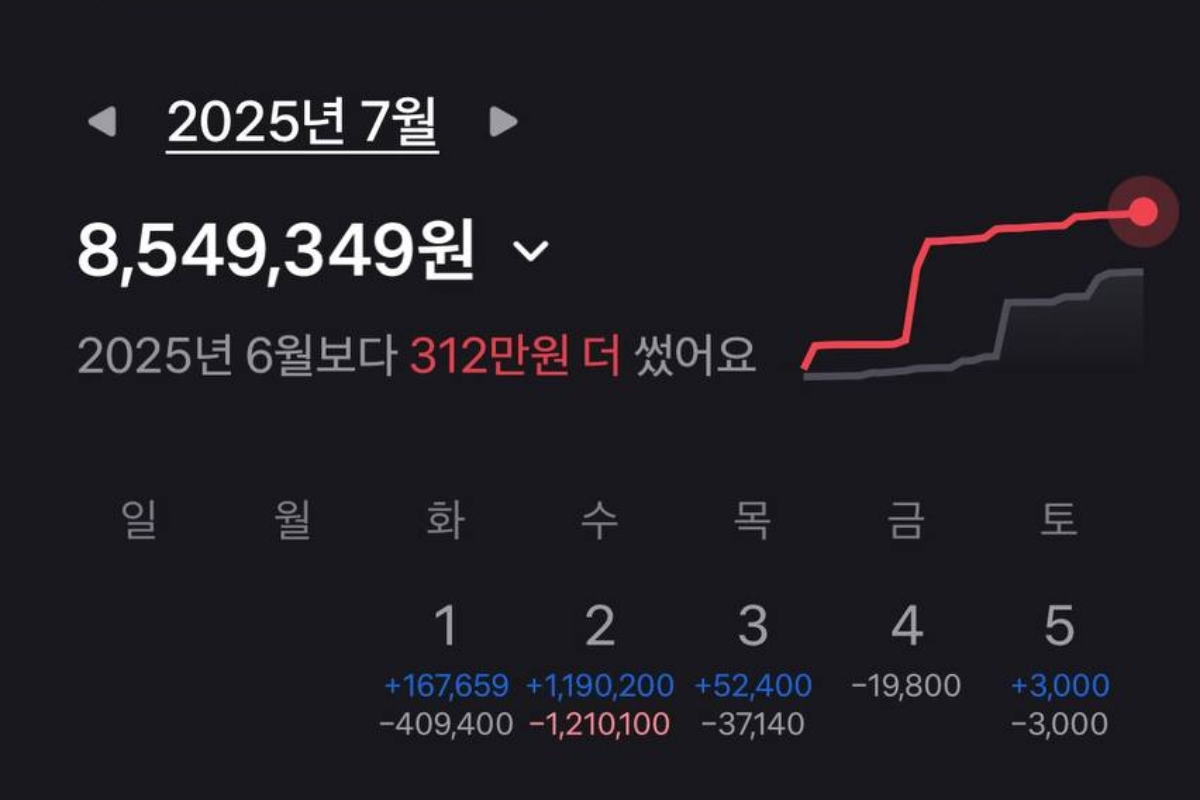
What's interesting is that this difference has nothing to do with whether a person is rich or poor. Sometimes even someone earning a good salary in Korea can feel poor inside. Because they know that if they stop working, the system will push them out immediately. Won makes you feel like a temporary guest inside that society. A dollar gives you strength even from a distance. That's why many foreigners describe earning in dollars as "not just income, but breathing room." Because with this kind of money, you start thinking not just about today, but about tomorrow.
There's another hard truth here: Won can be money tied to labor, while the Dollar can be money tied to results. For Won, you're mostly selling your time. For the Dollar, you're selling a skill, an idea, an experience, or distance. That's why income that comes in Dollars gives a person inner respect. A feeling arises: "I'm not just working, I'm creating value." And this feeling changes everything, down to how a person walks and how they speak.
This can be shown with a simple but clear scheme:
│
├── Won → Time is sold → Tied to the system
│
└── Dollar → Value is sold → Inner freedom
But caution is needed here too. Idealizing the Dollar too much is also a mistake. Because money earned in Dollars also demands responsibility. If a person has no inner discipline, the Dollar breaks them down even faster. Won squeezes slowly, the Dollar opens the door fast. Some people grow with the Dollar, some people get lost with it. So the real question isn't "which money is better," it's "which money is shaping you into what kind of person."
My personal view is that the strongest position is living stably with Won while thinking strategically with the Dollar. In other words, running daily life with real, local money while planning the future with global money. That way, a person doesn't become a slave to the system, nor lives in unrealistic dreams. There's balance in that. And it's exactly this balance that sets apart people who last long term abroad.
What kind of people manage to hold onto money?
Holding onto money isn't a secret, and it isn't a formula either. It's a matter of character. There are plenty of people abroad who earn a lot of money but can't save anything after several years. The reason is simple: they treat money as a reward. An inner excuse kicks in: "I struggled, so I deserve to spend it." For this kind of person, money is a prize. And a prize doesn't stick around long. It arrives with emotion and leaves with emotion.
A person who manages to hold onto money sees it as a tool instead. They don't feel happy when they see money, they think. Questions like "What freedom does this money give me? What stage does it get me out of?" kick in. That's why they don't rush to spend right away. Even if their salary goes up, they raise their standard of living slowly. Because they know: money gets used to quickly, but freedom is built slowly.
There's another important difference: a person who can hold onto money knows exactly who they're working for. They never spend just to please someone else. Brands, people, social pressure, none of that can easily break them down. Because inside them there's one rule: "I don't need to have a lot of money, but I must not become dependent on money." This rule protects a person from impulsive spending.
Another reason money disappears quickly abroad is the feeling of temporariness. Many people think to themselves, "This place is temporary anyway, let me just get by." A person who lives with this mindset never builds a solid foundation. Money comes in, but they don't build a house with it, they only pitch a tent. A person who can hold onto money, on the other hand, doesn't see their life as temporary no matter where they are. They treat today as part of the future too.
Lastly, here's the hardest truth: people who hold onto money often talk less. They don't tell everyone how much they're earning or where they're spending it. Because once money becomes public, pressure rises too. Demands, expectations, envy. Silence is finance's hidden shield. That's why real accumulated money is often quiet.
If this part felt familiar to you, it means you're moving past the stage of earning money and entering the stage of keeping money. And the next stage, which even fewer people ever reach, is this: using money and living without selling yourself.
📩 Telegram: https://t.me/odilxanivich
If you have any questions or comments, Contact →